

Indian Premier League from 2008 to 2026: History of the Best T20 Cricket Tournament
With India defending their ICC T20 World Cup title, they broke three records. They are the first to defend the title, to win it at home turf, and to win it for the first time. A trio of records now belongs to the biggest cricketing country, and cricketmania is at an all time high on […] The post Indian Premier League from 2008 to 2026: History of the Best T20 Cricket Tournament appeared first on Ten Sports TV.
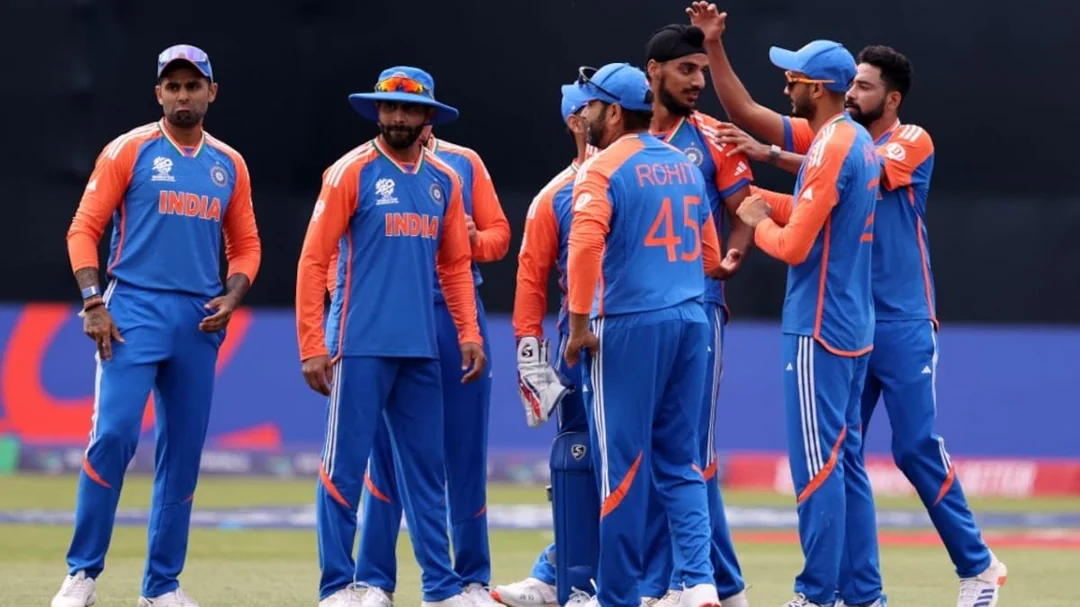
With India defending their ICC T20 World Cup title, they broke three records. They are the first to defend the title, to win it at home turf, and to win it for the first time. A trio of records now belongs to the biggest cricketing country, and cricketmania is at an all time high on the subcontinent. So, why is this important for a topic like this?
Well, in just a few weeks, the new edition of the best Twenty20 league will come our way. Not even a month after the big international final, the best players on the planet will be back on the pitch to represent the most recognizable franchises in T20 cricket when the 2026 Indian Premier League season rolls around.
With that in mind, in the midst of celebration and good vibes surrounding the most popular format of the iconic sport, it is the perfect time to look back at the history of the league. How did we get here? How did the IPL take the world by storm that quickly? What have been some of the biggest moments from the first edition of the tournament, almost two decades ago in 2008, until now?
Fans of the game know full well the degree of excitement and competitive spirit the sport can have, and fans of betting are familiar with the fact that knowing the history of the sport can help you predict games and make better decisions. So let us take a trip down memory lane and revisit the roots of IPL as the best cricketing betting odds are slowly being released for the upcoming season on March 31.
IPL Origins and Creation
The Indian Premier League (IPL) was established in 2008 by the Board of Control for Cricket in India (BCCI) as a franchise based Twenty20 cricket competition. The original idea was intended to transform the sport’s commercial and entertainment landscape. Inspired partly by American style franchise leagues and the global popularity of the T20 format, the IPL introduced city based teams owned by private investors and celebrities. Eight franchises participated in the inaugural season, including teams representing cities such as Mumbai, Chennai, Kolkata, Bangalore, and Jaipur.
The tournament immediately attracted worldwide attention because it brought together top international players, Indian stars, and young domestic talent in a fast paced format. Аlso, it was immediately supported by major television deals and corporate sponsorships. The first champions were the Rajasthan Royals, led by Australian legend Shane Warne. The league’s unpredictability and appeal were successfully established from the outset.
The IPL quickly became the world’s most prominent domestic T20 competition, thanks in part to the country where it was played being the unofficial capital of cricket. Of course, on the players’ side, lucrative contracts were offered, and the economics of cricket were transformed. From the beginning, the league emphasized entertainment as much as sport, with cheerleaders, celebrity team owners, music, promotions, and night matches becoming part of its identity.
IPL also changed cricket betting strategies and preferences as more people jumped in to try out the best that the sport offers. The entertainment focused approach significantly expanded cricket’s reach among younger audiences and international viewers who were used to it with other major sports popular abroad, mainly in Europe and the Americas.
Franchises, Ownership, and Commercial Growth
One of the defining features of the IPL has been its franchise ownership model, proven successful right off the bat. Teams were purchased by business conglomerates, media companies, and high profile individuals like star celebrities and prominent socialites. The Kolkata Knight Riders, for example, were co-owned by Bollywood actor Shah Rukh Khan, while the Mumbai Indians were owned by Reliance Industries, controlled by the Ambani family.
The model created a unique blend of sports and entertainment that helped attract global sponsors and investors without worrying about the budget and whether it could turn a profit right away. The league’s financial growth has been dramatic, to say the least. Broadcasting rights, sponsorships, and franchise valuations increased rapidly during the 2010s, turning the IPL into one of the richest sporting leagues outside North America and Europe. Teams themselves became valuable sports enterprises.
Certain franchises like the Chennai Super Kings and Mumbai Indians were eventually valued in the billions of dollars, not even a decade in. The league’s commercial success also inspired similar franchise based T20 tournaments around the world, many of which are still very young, like the Major League Cricket in the USA and the International League T20 in the UAE.
Expansion and Constant Evolution
Although the IPL began with eight teams, the number of franchises changed several times as the league evolved. Two additional teams were introduced in 2011, briefly expanding the competition to ten franchises. However, financial and administrative problems led to the termination of some teams, and the league returned to eight sides for several seasons after that.
Another major expansion occurred in 2022 when two new franchises, the Gujarat Titans and the Lucknow Super Giants, were introduced, bringing the total back to ten teams. This expansion reflected the continuing growth of the league and increased the number of matches and venues across India. It was clear that it was the right time for that, and that 2011 was a bit premature.
By the mid 2020s, a typical season featured 74 total matches played over roughly two and a half months. The IPL’s scheduling also reshaped the international cricket calendar. Over time, national boards began avoiding major series during the IPL window so their players could participate. This shift illustrated the league’s enormous influence on global cricket. For the 2026 season, a further expansion of games is planned with 84 total matches.
Controversies and Challenges
Like every major new endeavor, IPL was not without certain problems over its 18 years of existence. Despite its commercial success, the league has experienced several controversies that have affected its structure and reputation. The most serious occurred in 2013 with a major match fixing scandal involving players and team officials. Investigations led to severe disciplinary action, including the suspension of two major franchises, Chennai Super Kings and Rajasthan Royals, for the 2016 and 2017 seasons.
The suspension forced the creation of temporary replacement teams and raised questions about governance and integrity. Nevertheless, the league recovered quickly and has never looked back. The return of Chennai Super Kings in 2018, culminating in a championship victory that very season, became one of the IPL’s most famous comeback stories. Other controversies included disputes over franchise ownership, financial irregularities involving certain teams, and occasional political or security disruptions. Yet none of these incidents significantly slowed the league’s long term expansion nor its popularity among fans.
Star Players and Evolving Statistics
The IPL has served as a platform for many of cricket’s biggest stars while also launching the careers of emerging players. Indian icons such as MS Dhoni, Rohit Sharma, and Virat Kohli became central figures in the league’s narrative, household names, and international legends. Such players often serve as long term captains, franchise symbols, and T20 promoters/ambassadors.
International players also played crucial roles in the league’s success. Early seasons featured prominent names like Adam Gilchrist, Jacques Kallis, and Chris Gayle, whose explosive batting helped define the league’s entertainment value. Over time, players from nearly every major cricket nation participated, making the IPL the most internationally diverse T20 league.
The competition also became a proving ground for young Indian players. Many future national team stars gained recognition through standout IPL performances before establishing themselves in international cricket. By the 2020s, teenage prodigies and uncapped players increasingly attracted attention, which demonstrated that the league is a talent pipeline.
When it comes to players’ performances, the style of cricket in the IPL has evolved significantly from its early seasons. Initially, totals around 150-160 were considered competitive. Over time, however, aggressive batting strategies, improved analytics, and deeper batting lineups pushed scores dramatically higher and gave the fans what they always want: more high tier, competitive action.
Record breaking performances became commonplace, including massive individual innings and frequent centuries. The number of centuries in a single season gradually increased as well, reaching a record fourteen in 2024 as batting conditions and tactics continued to favor high scoring. Teams regularly surpass the 200 run mark, and high scoring chases became a defining feature of the league. By 2025, matches frequently produce totals that would have seemed extraordinary during the early years of the IPL.
Twenty20 (T20) Cricket Format Trivia and FAQs
What is T20 cricket? How is it different from other formats?
T20 (Twenty20) cricket is the shortest official format of the sport where each team faces a maximum of 20 overs. Unlike Test cricket, which can last up to five days, or ODIs (50 overs), a T20 match usually finishes in about 3 hours. The format encourages aggressive batting, innovative shots, and fast paced gameplay. The result is a highly entertaining format for spectators.
When and why was T20 introduced?
T20 cricket was introduced in 2003 by the England and Wales Cricket Board. The goal was to make cricket more accessible and appealing to modern audiences, especially younger fans who preferred shorter sporting events similar in length to football matches. The format quickly became popular worldwide and led to global tournaments such as the ICC Men’s T20 World Cup.
How long does a match last?
A typical T20 match lasts between 2 and a half and 3 hours. Each team plays 20 overs (120 legal deliveries) unless they are bowled out earlier. With innings breaks, strategic timeouts, and short intervals, the match is designed to fit into a single evening session just like other primetime events.
What are the Powerplay rules in T20?
The Powerplay is a special fielding restriction period during the first 6 overs of a T20 innings. Rules include that only two fielders are allowed outside the 30 yard circle, encourage aggressive batting, and often lead to fast scoring early in the innings. Teams aim to maximize runs during this phase, while fielding teams try to take early wickets.
Why do batsmen take more risks in T20 cricket?
Because teams only have 120 balls, batsmen cannot afford to build innings slowly. This leads to frequent big shots and sixes, creative strokes like reverse sweeps and scoops, and strategic hitting during certain overs. Players such as Chris Gayle, AB de Villiers, and Jos Buttler became famous for their explosive batting styles in T20 cricket.
What happens if a T20 match ends in a tie?
If both teams score the same number of runs, the match is decided by a super over. In a Super over, each team plays one extra over, and the team with the higher score wins. If still tied, additional super overs may be played. A famous example occurred in the 2019 Cricket World Cup Final, a dramatic controversy as England beat New Zealand.
What are some of the most popular T20 leagues in the world?
T20 leagues have transformed cricket into a global entertainment industry. Some major leagues include the Indian Premier League (IPL) as the richest and most popular league, the Big Bash League in Australia, the Pakistan Super League, and the Caribbean Premier League. These leagues attract international stars and millions of viewers and are the epitome of professional club play in Twenty20.
How has T20 changed the way cricket is played?
T20 cricket has influenced all formats of the game by introducing a slew of new things to the game. It brought more aggressive batting strategies and new shots like the ramp and switch hit, and has specialized roles such as finishers and death bowlers. In general, there is greater emphasis on fitness and fielding, which makes it more in line with other popular sports. Even traditional formats (ODIs and Tests) now see faster scoring rates because of T20’s influence.
What are “death overs”?
The death overs refer to the final 4-5 overs (usually overs 16-20) of an innings. During this phase, batsmen attempt maximum scoring, bowlers use yorkers, slower balls, and variations, and matches can dramatically swing in just a few balls. Specialist bowlers like Lasith Malinga became legendary for their ability to control runs in this stage.
Why has T20 become so popular worldwide?
T20 has grown rapidly because it makes cricket more similar to other established sports. It offers shorter matches, high scoring, and dramatic finishes, entertainment elements like music and lights, and global franchise leagues that attract international talent. Major tournaments such as the ICC Men’s T20 World Cup now draw massive global audiences and help expand cricket into new countries.
The post Indian Premier League from 2008 to 2026: History of the Best T20 Cricket Tournament appeared first on Ten Sports TV.
This article has been sourced from various publicly available news platforms around the world. All intellectual property rights remain with the original publishers and authors. Unshared News does not claim ownership of the content and provides it solely for informational and educational purposes voluntarily. If you are the rightful owner and believe this content has been used improperly, please contact us for prompt removal or correction.















![SAFTAs 19: How celebs dressed to impress [photos]](https://www.thesouthafrican.com/wp-content/uploads/2026/03/Untitled-design-1.jpg.optimal.jpg?#)