

Junta slashes power in 2 major Myanmar cities
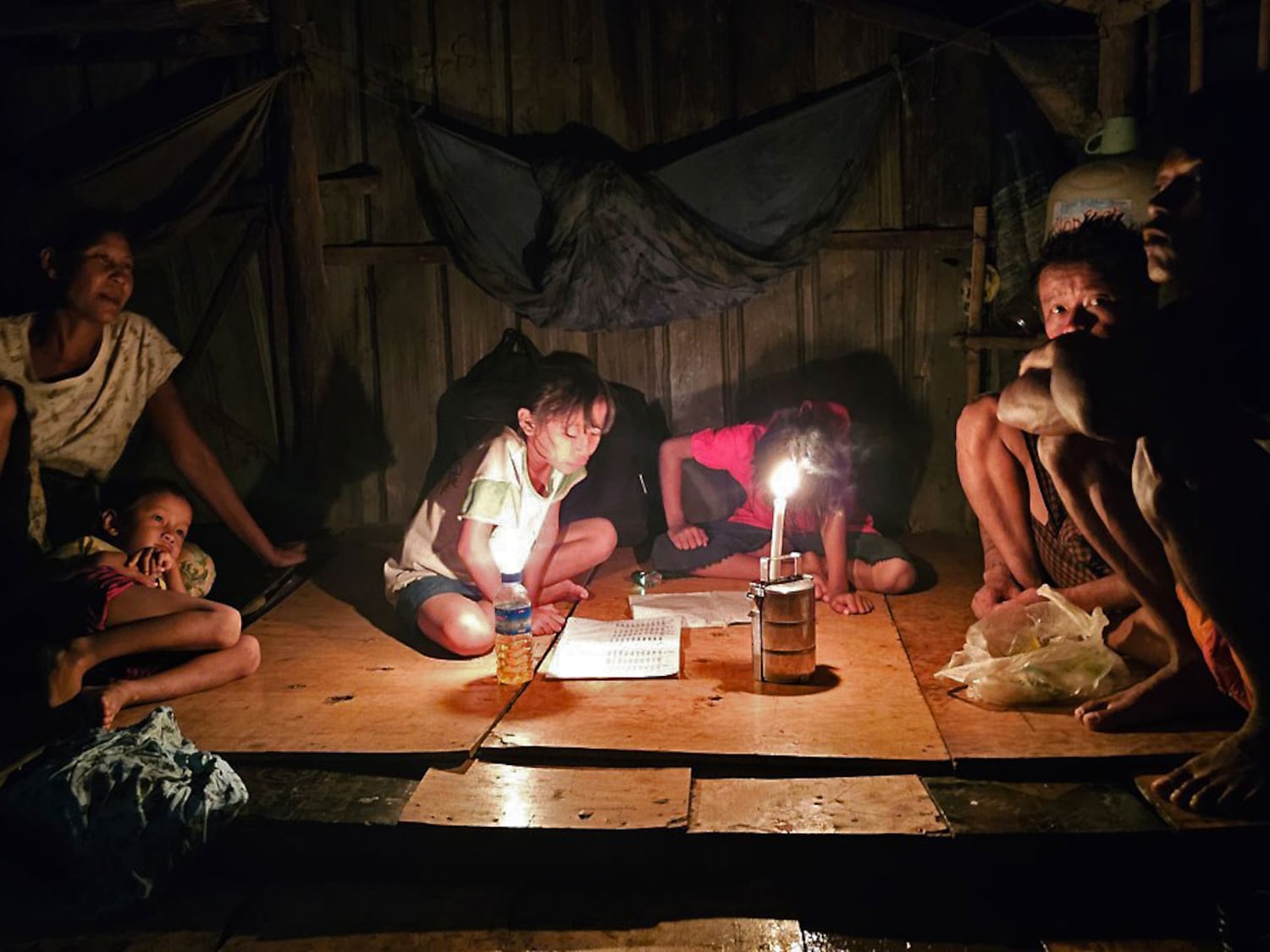
The further reduced hours of power mean residents can’t work or charge electronic devices.
Read RFA coverage of this story in Burmese.
Military rulers have ordered rolling blackouts in Myanmar’s two major cities — Yangon and Naypyidaw — cycling off power in different areas for longer periods to manage electricity demand and prevent a total grid collapse, electricity officials said.
The junta-controlled Yangon Electricity Supply Corp. said that starting Jan. 5, the city would receive electricity for only eight hours a day on a rotating schedule, said an official from the township electricity office in Yangon.
But often the periods of power are shorter than that, making it hard to cook, work and communicate -- adding another layer of stress for residents coping with a sluggish economy and a civil war that has wracked the country for nearly four years.
“Today, we didn’t have power for even four hours,” said a Yangon resident, speaking on condition of anonymity for safety reasons. “It came on at 5 a.m. and went out again by 7 a.m. I struggled to cook rice and couldn’t charge my tablet. I also couldn’t work.”
“Life has become very challenging,” he said. “It’s already hard to make a living and earn money in these times, and if this situation persists, things will only get harder in the future.”
Blackouts have become widespread across Myanmar, where electricity production has dropped by at least a third since the 2021 coup d'état, a decline that analysts attribute to economic mismanagement.
The junta’s Ministry of Electricity has reported that the average daily electricity demand across Myanmar is 4,400 megawatts. But on Jan. 5, only 1,701 megawatts were produced. The ministry attributed the power reduction to damaged power lines, natural disasters and low gas quotas.
Myanmar currently operates 29 hydroelectric power plants, 27 natural gas-fired power plants, two coal-fired power plants, and six solar power plants.
RFA could not reach the Yangon Electricity Supply Corp. for comment.
Military stronghold affected
The capital of Naypyitaw, the military regime’s stronghold, used to receive a consistent power supply during hours when electricity was supplied, but now it has more rolling blackouts, a resident told RFA.
“Power outages began yesterday, affecting almost all areas, including those previously exempt,” said the resident.
RELATED STORIES
Myanmar power output dims by one-third under junta rule
Myanmar’s worsening power woes leave factory workers in dangerous heat
Singapore power plant suspension may leave more of Myanmar in the dark
Junta under pressure to restore access to electricity in Myanmar
Soe Thura Tun, electricity and energy minister of the shadow National Unity Government -- made up of former civilian leaders overthrown by the military -- told RFA that the country’s electricity shortage is a challenging issue with no easy solution.
“They can’t even supply enough electricity for Yangon alone, which accounts for nearly half of the country’s total usage,” he said about the junta.
“In fact, Yangon consumes slightly more than half of the national electricity supply,” he said. “Since they are struggling to meet demand in Yangon, the country’s overall production has dropped below 50% over the past four years. This makes the situation extremely difficult to resolve.”
The ruling junta has previously acknowledged the problem and pledged to address it. Junta leader Senior Gen. Min Aung Hlaing said on Jan. 27, 2023, that efforts were underway to achieve sufficient electricity supply by 2025.
In the past, when electricity was insufficient, solar power was widely used.
But the cost of solar power equipment could increase further amid the electricity supply crisis, making it too expensive as an alternative energy source to meet growing power demands, said an energy analyst, who didn’t want to be named for fear of reprisals by the junta.
“Now, as solar power becomes more relied upon again due to reduced electricity supply, we can expect the price of solar equipment to rise,” he said. “This trend is likely to continue given the current market dynamics.”
Edited by Roseanne Gerin and Malcolm Foster.
This article has been sourced from various publicly available news platforms around the world. All intellectual property rights remain with the original publishers and authors. Unshared News does not claim ownership of the content and provides it solely for informational and educational purposes voluntarily. If you are the rightful owner and believe this content has been used improperly, please contact us for prompt removal or correction.





















![SAFTAs 19: How celebs dressed to impress [photos]](https://www.thesouthafrican.com/wp-content/uploads/2026/03/Untitled-design-1.jpg.optimal.jpg?#)