Satellite imagery reveals increased activity at North Korean nuclear complex
Steam plumes and construction at Yongbyon suggest Kim Jong Un is making good on his five-year nuclear buildup plan.
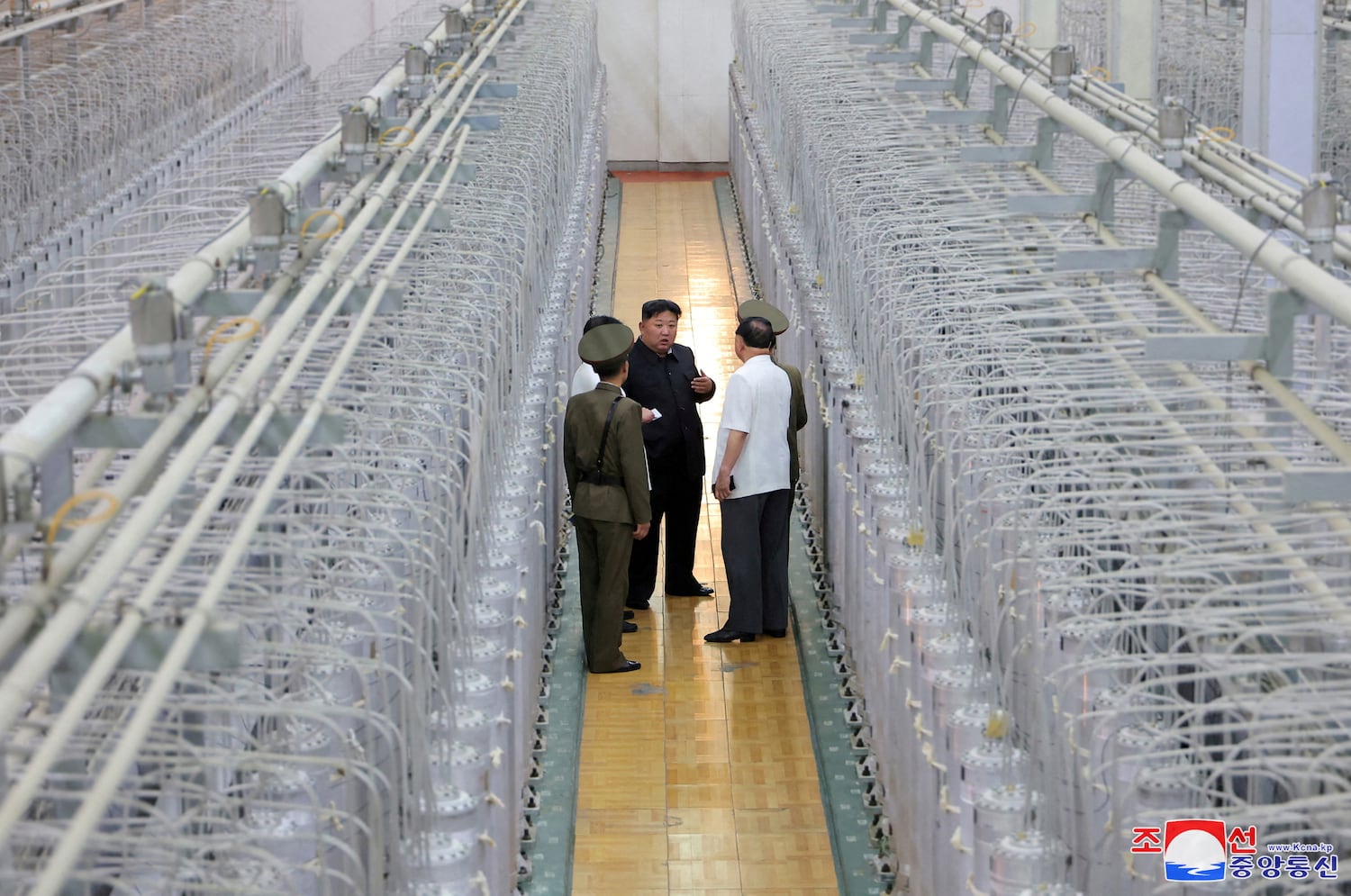
At North Korea’s Yongbyon Nuclear Complex, heightened activity observed on satellite imagery indicates that Pyongyang is increasing its capacity to produce nuclear weapons, experts told Radio Free Asia.
The imagery shows new buildings and plumes of steam in previously inactive areas of the complex, which lies roughly 90 kilometers (56 miles) north of the capital.
North Korea has long claimed that Yongbyon serves peaceful, civilian energy purposes, but the international community and monitoring organizations say that the complex produces fissile materials to produce nuclear weapons.
The increased activity observed in April follows Kim Jong Un’s announcement at the Ninth Congress of the ruling Korean Workers’ Party in February that the country would build up and diversify its nuclear arsenal over the next five years.
Where there’s smoke…
Images captured by Planet Labs on April 18 and 20 show steam emitting from the thermal generating plant at the radiochemical laboratory. On March 12 and April 25, images showed the reactor discharging water into the nearby Kuryong River. These discharges are consistent with many other images captured since January.
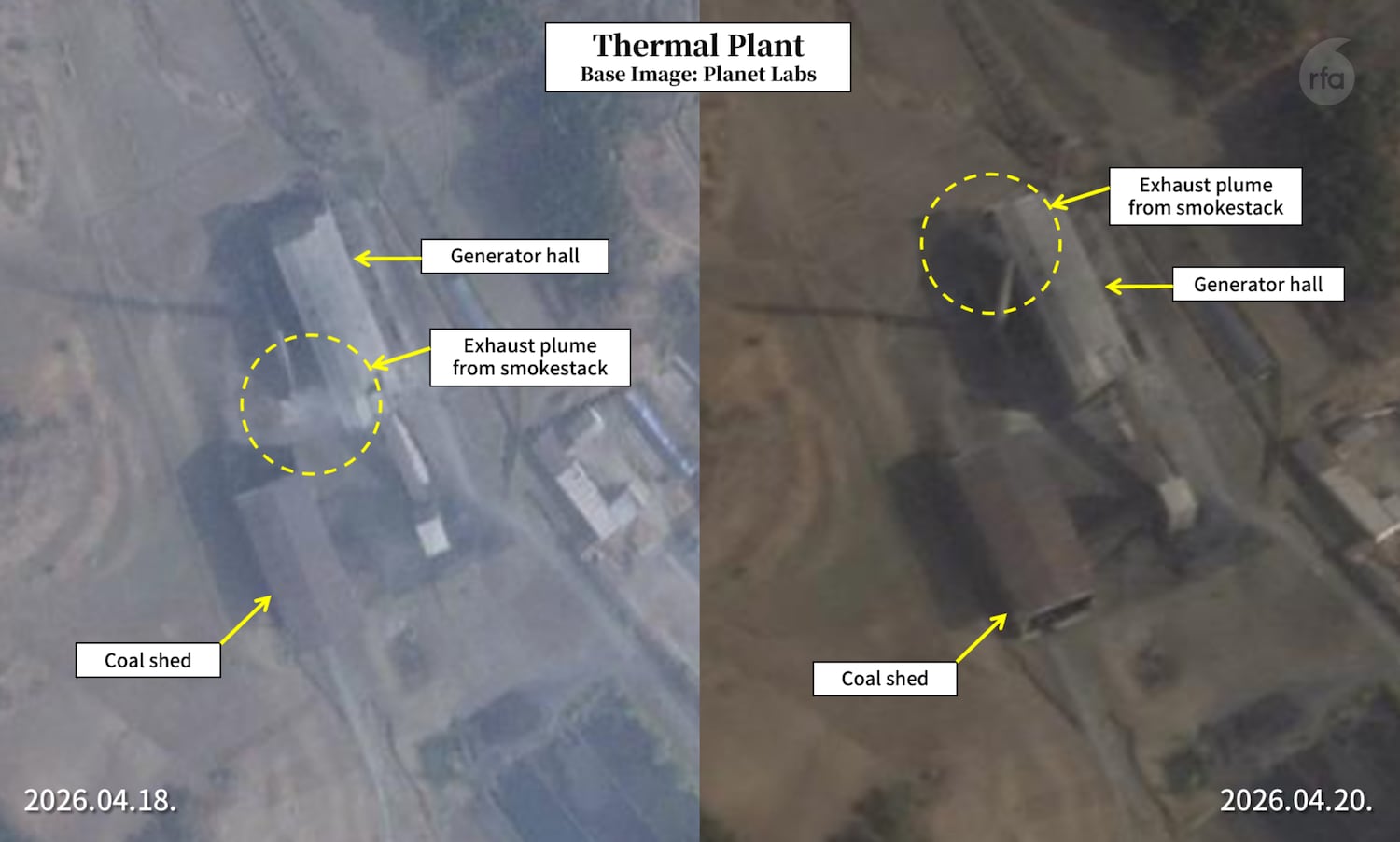
The evidence suggests that North Korea is producing weapons grade plutonium, Olli Heinonen, a former deputy director-general of the International Atomic Energy Agency and a distinguished fellow at the Stimson Center, told RFA.
“It looks that North Korea still continues to produce plutonium in the 5 megawatt reactor and it’s on a campaign basis,” he said, using a technical term to indicate a start-to-finish production cycle. “So it operates for about a year or so and then they discharge the fuel which is a very quick operation.”
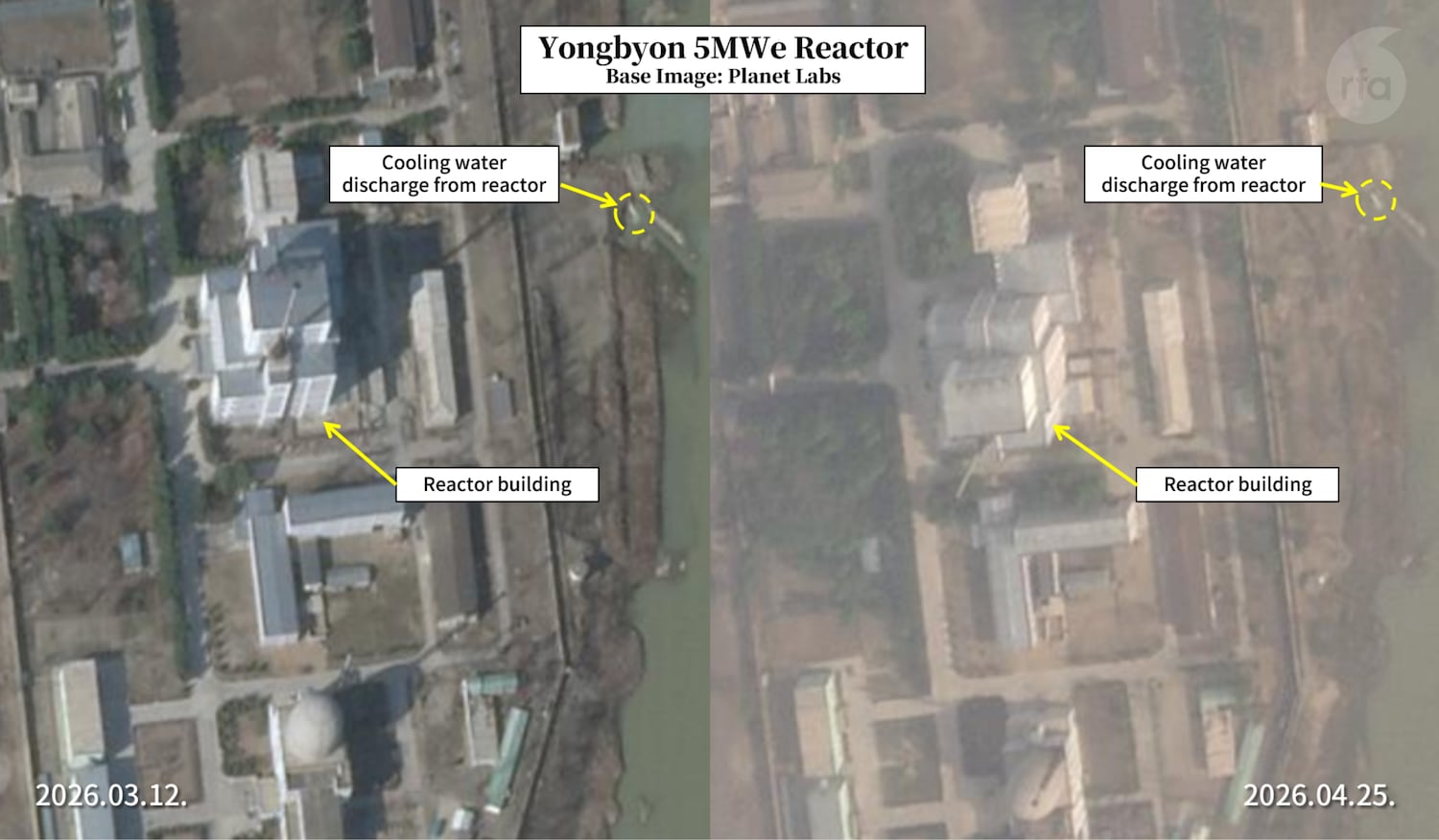
Jacob Bogle, a U.S.-based private satellite imagery analyst, told RFA that since October 2024, the complex has been in its seventh cycle of fuel irradiation and reprocessing for plutonium production.
“This multi-year cycle of activity has continued to the present and is supported by two key pieces of visual evidence - consistent water discharge from the 5 MW reactor throughout 2026 and occasional activity at the Radiochemistry Lab as indicated by steam generation,” he said.
The findings are consistent with confirmation from the International Atomic Energy Agency, or IAEA, that North Korea has significantly expanded its nuclear activities at Yongbyon.
During a visit to South Korea on April 15, IAEA Director-General Rafael Grossi told reporters that many of the facilities at Yongbyon, including the main reactor, were active.
“This suggests a serious increase in North Korea’s nuclear weapons production capacity, which appears sufficient to produce dozens of warheads,” Grossi said, adding that the construction of a new nuclear enrichment facility comparable to existing ones had also been confirmed.
Construction ongoing
Satellite imagery also confirms that new buildings are appearing at the complex. Exterior construction on one of the new buildings–suspected to be a new uranium enrichment facility–was completed in either November or December of last year.
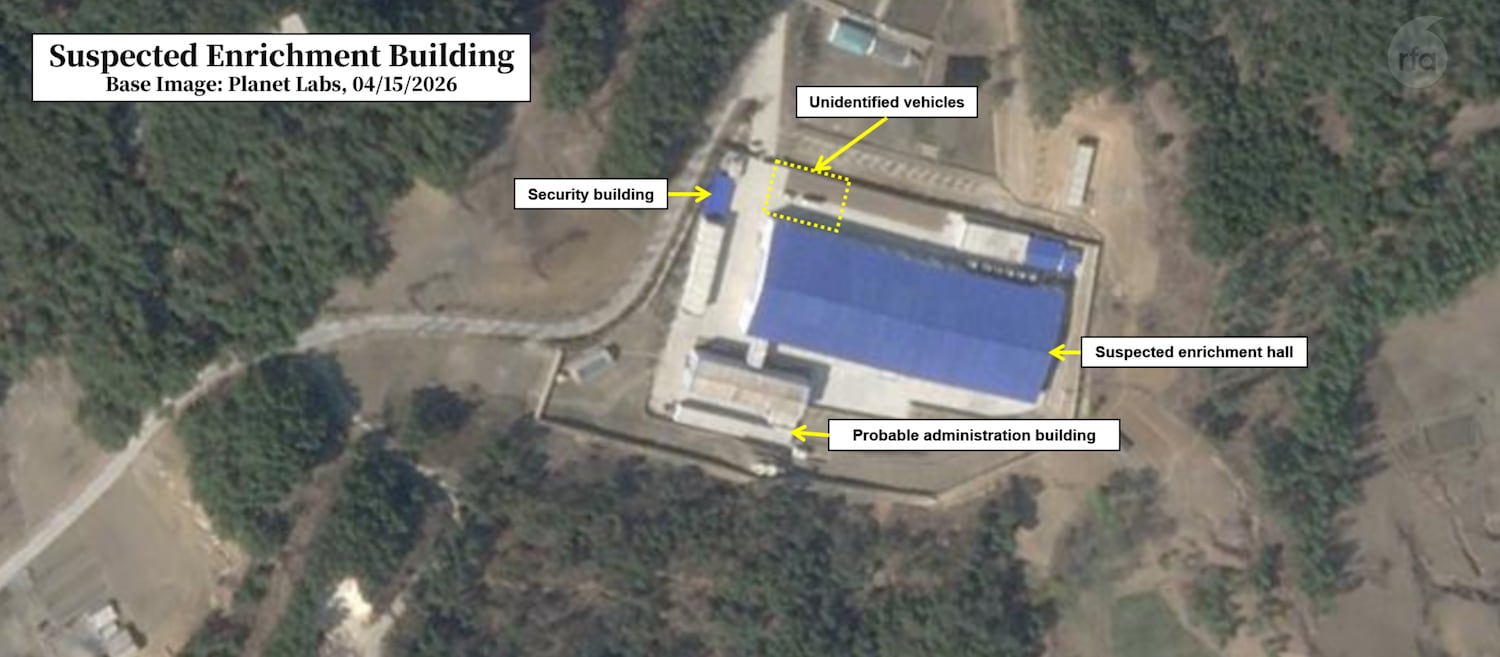
Bogle said that melting snow on the roof of the building was visible, suggesting the building is connected to electricity and that interior construction is at a minimum still ongoing.
A vehicle was observed next to the building on April 15, though no external indicators have emerged to determine whether interior work is still in progress or whether the facility has become operational.
Additionally, in March, the roofs of two buildings within the radiochemical laboratory were replaced.
New high-rise residential buildings have also been erected in the area, likely needed to house an expanded workforce.
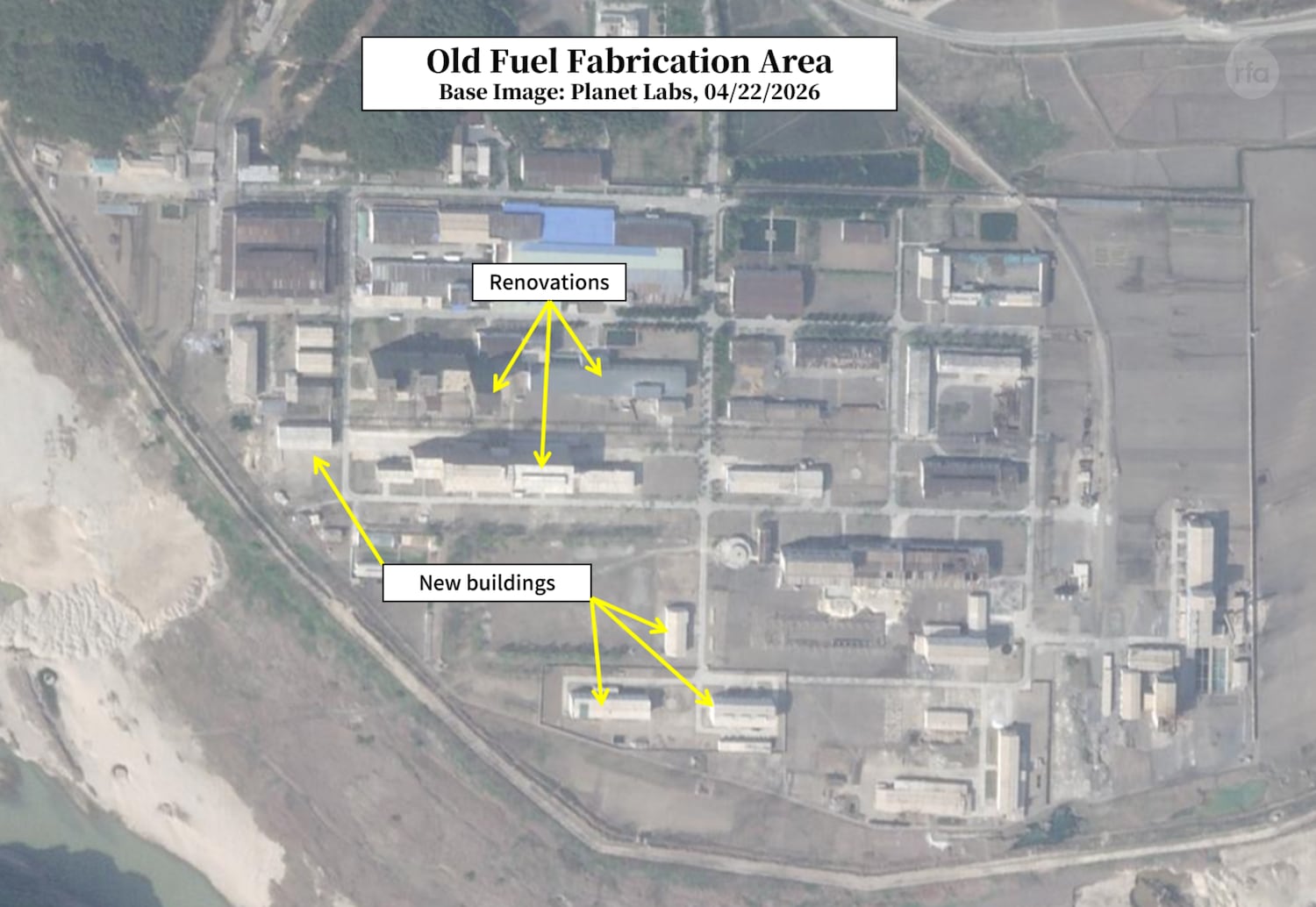
Heinonen said that the satellite images showed changes to the complex that are not yet understood. In the southern part of the complex, in an area where fuel rods were fabricated, four entirely new buildings have appeared.
“Some of them seem also to be quite well-built and one is even separated from the others with a fence which tells me that it’s very important,” he said. “We don’t know what it is, but I think that these buildings have to do with a plan of Kim Jong Un to enhance the nuclear weapons production and to produce nuclear material and components for nuclear weapons. So we have to see that change as a part of his former and current five-year plan.”
Edited by Eugene Whong.
This article has been sourced from various publicly available news platforms around the world. All intellectual property rights remain with the original publishers and authors. Unshared News does not claim ownership of the content and provides it solely for informational and educational purposes voluntarily. If you are the rightful owner and believe this content has been used improperly, please contact us for prompt removal or correction.